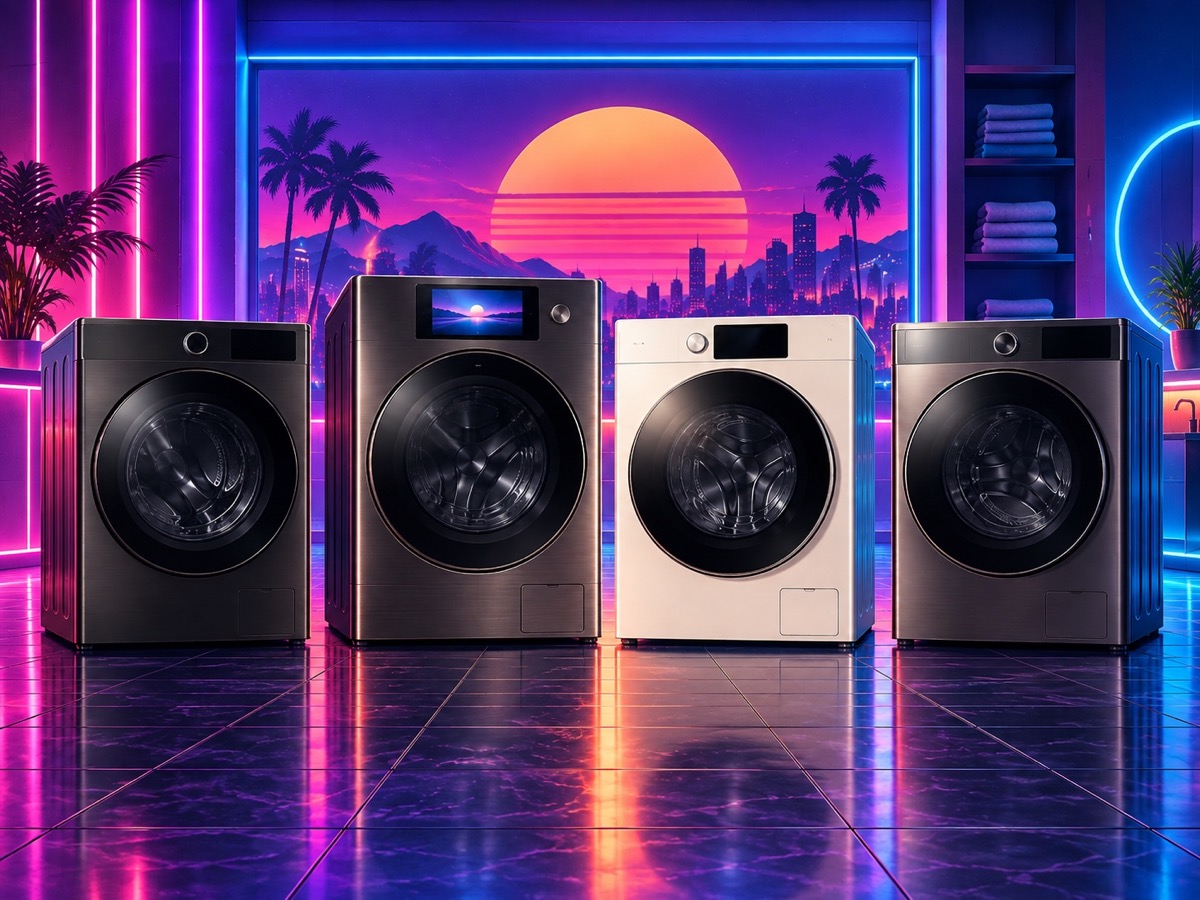
The appeal is obvious: put dirty clothes in one drum, press a button and come back to clean, dry clothes without a transfer. All four models here are ventless heat-pump combos, so they can use a standard 120V outlet and do not need a dryer exhaust. That makes them useful for apartments, closets and rooms where a second machine simply will not fit.
The compromise is throughput. A combo cannot wash the next load while it is drying the first, and heat-pump drying is deliberately gentler and slower than a conventional vented dryer. Capacity on the label also describes the wash drum; a full drum may need a smaller dry load for the best result.
Our read is use-case based. WM9998 is for the biggest household and newest LG platform. WM6998 is the value-minded LG choice with a proven first-generation platform. Samsung WD53 is for a fast advertised cycle and a polished screen/app experience. GE Profile is for buyers who value service access, lint maintenance and a stronger sealed-system warranty.
We are using the US model numbers where they are known: LG SIGNATURE WM9998HBA, LG WM6998HBA/HVA, Samsung WD53DBA900HZ/HZA1/HYA1 variants and GE Profile PFQ97HSPVDS. Finish suffixes and regional versions can change pricing, color and a few features. Check the label on the exact listing before ordering.
The short answer
Choose LG WM9998 if capacity and the newest drying system matter most.
At 5.8 cubic feet, the Signature is the roomiest option here. LG lists an 89-minute Quick Wash+Dry cycle for a 10-pound test load, Dual Inverter HeatPump technology, a 7-inch touchscreen and ezDispense. It is also the most expensive and the least proven over many years of ownership.
Choose LG WM6998 if you want the simpler value case.
The 5.0-cubic-foot WM6998 is the older, widely reviewed LG WashCombo platform. It offers a useful set of cycles, TurboWash-style spray action, ThinQ controls and a standard 120V installation. Its drying is credible, but bulky bedding can still need extra time or a smaller load.
Choose Samsung WD53 for a fast cycle promise and smart controls.
The 5.3-cubic-foot Bespoke AI Combo advertises a 98-minute Super Speed wash-and-dry cycle, AI OptiWash & Dry and a 7-inch AI Home display. It is a strong fit when easy controls and quick everyday loads matter. Lint care, software dependence and long-term service are still worth scrutinizing.
Choose GE Profile if serviceability and maintenance are your anxiety points.
GE’s 4.8-cubic-foot PFQ97HSPVDS is the least capacious here, but Yale Appliance’s comparison found its heat-pump system easier to access and its app more useful for diagnostics. GE also advertises a longer sealed-system warranty. Its cycle times remain combo-slow, especially with towels and bulky loads.
At a glance: the differences that count
| The detail | LG WM9998HBA | LG WM6998HBA | Samsung WD53 | GE PFQ97HSPVDS |
|---|---|---|---|---|
| Wash capacity | 5.8 cu. ft. | 5.0 cu. ft. | 5.3 cu. ft. | 4.8 cu. ft. |
| Drying system | Dual inverter heat pump | Inverter heat pump | Ventless heat pump | Ventless inverter heat pump |
| Headline quick cycle | 89 min Quick Wash+Dry test load | Under 2 hr claim; load dependent | 98 min Super Speed claim | About 90 min Quick Wash + Dry claim |
| Installation | 120V; no vent | 120V; no vent | 120V; no vent | 120V; no vent |
| Controls | 7 in LCD, ThinQ, ezDispense | Touch controls, ThinQ, auto dispense | 7 in AI Home, SmartThings | SmartHQ, SmartDispense |
| Best fit | Big loads, new LG tech | Value, familiar LG workflow | Fast routine loads, smart home | Maintenance and service access |
Cycle times are not interchangeable test results. LG’s 89-minute figure is based on an internal 10-pound Quick Wash+Dry test; Samsung’s 98-minute figure is for its Super Speed cycle; GE’s “about 90 minutes” depends on the quick program and load. Real towels, bedding, humidity, fabric mix and how full the drum is can turn any of these into a two- to four-hour job.
What combo ownership changes
Capacity is only half the story
The WM9998’s 5.8 cubic feet is meaningful for families, but dry performance still depends on how tightly the wet clothes can tumble. If a load comes out damp, removing a few bulky pieces is often more effective than adding another high-heat setting. The GE’s 4.8 cubic feet is smaller, yet it can be a better fit for a narrow laundry closet and a household that does smaller loads more often.
Heat pumps save energy, not time
Ventless heat-pump drying reuses warm air and condenses moisture instead of pushing hot air outdoors. That is efficient and gentle, but it is not a magic shortcut. The heat exchanger, condenser and lint path need to stay clean, and the machine may use water during parts of the drying process. Build the long cycle into your routine rather than treating the fastest headline time as the everyday baseline.
Lint and service access are buying features
Yale Appliance’s WM6998 versus GE comparison found separate lint filters in both machines and no problematic buildup after its teardown, but it also found the GE’s heat-pump system easier for a technician to reach. LG recommends cleaning its filter after every wash; GE’s guidance is less frequent. Samsung and the new LG Signature add their own filter and condenser-cleaning routines. Read the care manual before you decide which machine is “low maintenance.”
One machine means one queue
A combo is perfect when your priority is avoiding a transfer. It is less perfect for a family running four loads on Sunday. A separate washer and dryer can run in parallel and usually finishes bulky loads faster. The value proposition is space, convenience and standard installation—not maximum laundry throughput.
LG SIGNATURE WM9998HBA
The WM9998 is LG’s 2026 Signature WashCombo, with a 5.8-cubic-foot Mega Capacity drum, Dual Inverter HeatPump technology, built-in intelligence, ezDispense and a 7-inch LCD touchscreen. LG says the unit can complete a Quick Wash+Dry cycle in as fast as 89 minutes on a 10-pound internal test load. Its US list price is $3,399, though current promotions can move the street price considerably.
The appeal is straightforward: more room, a cleaner control experience and a redesigned lint and condenser system. The 120V, ventless format remains apartment-friendly, and ThinQ adds alerts and downloadable cycles. The Signature styling and large touch display also make it feel more like a premium appliance than a compromise box.
The risk is that this is a newer platform with less long-term owner history. Its bigger drum does not make it a parallel laundry system, and a full bedding load can still take time to dry. The premium only makes sense if the extra capacity, display and newer heat-pump design solve a real problem in your home.
Reasons to buy
- Largest capacity here at 5.8 cu. ft.
- 89-minute internal quick-cycle claim
- 7-inch display, ezDispense and ThinQ
- 120V ventless installation
Reasons to think twice
- Highest list price
- Limited long-term owner history
- One drum still means one laundry queue
- More electronics and service complexity
For: larger households with a tight laundry footprint and a budget for LG’s newest system. Skip if: you prefer a proven platform, a simpler control panel or the lowest service risk.
LG WM6998HBA / WM6998HVA
The WM6998 is LG’s 5.0-cubic-foot WashCombo platform, introduced with Inverter HeatPump technology, a direct-drive motor, ThinQ connectivity and a standard 120V plug. LG marketed a complete wash-and-dry cycle in under two hours, while independent tests show that load type matters more than the headline.
Its strongest case is familiarity. The machine has a broad cycle selection, automatic detergent dispensing and a mature body of user discussion compared with the newer WM9998. Yale Appliance’s testing found it cleaned well and dried mixed loads, though sheets, blankets and comforters often pushed toward three hours or needed a smaller load.
The deep cabinet and installation clearances deserve attention. Yale measured the opened-door depth at more than 37 inches and found LG’s service access more involved than GE’s. Those are not reasons to reject it; they are reasons to measure the room and leave a technician-friendly path.
Reasons to buy
- 5.0 cu. ft. family-sized drum
- Usually less expensive than WM9998
- Strong cycle selection and ThinQ app
- Good wash performance in independent testing
Reasons to think twice
- Deep installation footprint
- Bulky drying can take hours
- Filter care is part of the routine
- Less premium display and finish
For: buyers who want LG’s one-drum workflow without paying for the Signature model. Skip if: you need the largest drum or have a shallow closet.
Samsung Bespoke AI Laundry Combo WD53
The Samsung WD53 family is a 5.3-cubic-foot Bespoke AI Laundry Combo with a ventless heat-pump dryer, a 7-inch AI Home display, SmartThings connectivity and AI OptiWash & Dry. Samsung advertises a 98-minute Super Speed wash-and-dry cycle and a standard 120V installation for the ventless model. The US listing commonly appears as WD53DBA900HZ, WD53DBA900HZA1 or WD53DBA900HYA1 depending on finish and channel.
Samsung’s advantage is the feeling of a connected appliance. The screen and app make cycle selection, alerts and diagnostics approachable, and the 5.3-cubic-foot drum splits the difference between LG’s two capacities. If your household mostly runs everyday clothing loads, the Super Speed promise is more relevant than a maximum comforter rating.
The cautions are the same ones we apply to any smart combo: the fast cycle is a specific test, lint and condenser care still matter, and long-term repair experience varies by location. Samsung’s published page lists the ventless model around $2,299, but retailer promotions and finish variants can move that number.
Reasons to buy
- 5.3 cu. ft. capacity
- 98-minute Super Speed claim
- 7-inch AI Home display and SmartThings
- Simple 120V ventless installation
Reasons to think twice
- Fastest cycle is load and program dependent
- Smart features add software complexity
- Lint management needs consistent care
- Service quality varies by region
For: connected homes that value a clear screen and quick everyday cycles. Skip if: you want the longest track record or the simplest possible service story.
GE Profile UltraFast PFQ97HSPVDS
GE’s Profile UltraFast combo uses a 4.8-cubic-foot drum, a ventless inverter heat pump, SmartDispense and SmartHQ controls. It is one of the earlier full-size North American combos and remains a useful baseline for the newer LG and Samsung models. The US version is 120V and does not require a dryer vent.
Its best argument is not a flashy screen; it is the ownership details. Yale Appliance’s performance tests found it dried mixed clothing and bedding well, and its technician found the heat-pump system easier to access than LG’s. GE also includes five years of sealed-system coverage in addition to the motor warranty, which matters when a compressor or heat exchanger is the expensive part of the repair.
The compromises are capacity and speed. 4.8 cubic feet is enough for many couples and small families but less forgiving with large bedding. GE’s quick-cycle claims do not erase the fact that full towels and bulky loads can take multiple hours. The cabinet is also tall and deep, so measure doors, closet depth and service clearance before delivery.
Reasons to buy
- Heat-pump system is easier to access
- Five-year sealed-system coverage
- Good drying results in independent testing
- Useful SmartHQ diagnostics
Reasons to think twice
- Smallest US capacity here at 4.8 cu. ft.
- Tall, deep cabinet needs careful measuring
- Fewer cycles than LG
- Bulky loads still take time
For: apartment owners and careful buyers who prioritize service access and lint maintenance. Skip if: your household regularly fills a king comforter-sized drum.
Watch before you buy
Combo videos are especially useful because drying speed and lint maintenance are hard to understand from a product page. The independent tests below show the older platforms; the exact new WM9998 is still too new for a deep, long-term video archive.
LG WM6998 vs GE Profile — Yale Appliance test
Samsung WD53 — long-term test and teardown
GE Profile PFQ97HSPVDS — hands-on overview
The Signature model is new enough that most long-term videos still cover the WM6998 platform. Open the latest WM9998 videos on YouTube ↗
So, which combo fits your laundry room?
Choose WM9998 when the largest drum and the newest LG features solve a real space or family problem. Choose WM6998 when you want LG’s established combo workflow at a lower price. Choose Samsung WD53 for a connected interface and a fast everyday-cycle pitch. Choose GE Profile when service access, lint care and sealed-system coverage are worth trading away some capacity.
Before ordering any of them, measure the full delivery route, door swing, closet depth and drain position. Then plan your laundry rhythm around one machine doing two jobs. That is the part no product page can automate.
A few things people ask
Do these combos need a dryer vent?
No. The models compared here are ventless heat-pump combos. They still need a water supply, drain and electrical outlet, and they need the manufacturer’s specified clearances.
Can a combo wash and dry a king comforter?
Capacity and fabric bulk matter. The larger LG models give you more room, but a wet comforter can still be too dense for efficient drying. Check the care guide and expect a longer or smaller-load cycle.
Is the LG WM9998 much better than the WM6998?
It is larger and newer, with a revised heat-pump and lint system plus a touchscreen. The WM6998 remains the value pick for shoppers who do not need 5.8 cubic feet or Signature styling. Long-term reliability data on the WM9998 is still limited.
Which combo dries fastest?
Samsung advertises a 98-minute Super Speed cycle and LG lists an 89-minute WM9998 internal test, but those are specific loads. For real laundry, load size and fabric mix matter more than a headline minute count.
Sources & how we compared
We used manufacturer pages and specifications for capacities, cycle claims, controls and installation. We cross-checked performance, lint and serviceability against independent testing and owner reports, and we avoid treating a brand’s internal cycle time as a universal result.
- LG SIGNATURE WM9998HBA product page (capacity, 89-minute test, heat-pump system and current list price).
- LG WM6998 product page and LG launch announcement.
- Samsung WD53 product page (5.3 cu. ft., 98-minute Super Speed and AI controls).
- GE Profile PFQ97HSPVDS and Yale Appliance’s LG vs GE test and teardown.